Peter Coker RA (1926–2004) was a prominent British painter, draughtsman, printmaker, writer, and teacher, celebrated for his powerful realist works that bridged the Kitchen Sink School and a deeply personal, textured approach to landscape painting. He was elected a Royal Academician in 1972.
Born Peter Godfrey Coker in London on 27 July 1926, he grew up in Leytonstone. He developed an early interest in art, influenced by his mother’s love of music and his grandfather’s engraving skills. After leaving school, he worked at Odhams Press while attending evening classes at St Martin’s School of Art (1941–43). He served in the Fleet Air Arm during World War II (1943–46), then returned to full-time study at St Martin’s (1947–50). He later attended the Royal College of Art (1950–54), where he won scholarships and studied alongside artists such as John Bratby and Edward Middleditch.
Coker’s first solo exhibition at the Zwemmer Gallery in 1956 brought early success with his raw, stylised paintings of a local butcher’s shop—works that aligned him temporarily with the Kitchen Sink School but stood out for their decorative structure and bloodless, almost abstract quality. A formative trip to Paris in 1950 introduced him to the paintings of Gustave Courbet, profoundly shaping his commitment to realism and heavy impasto.
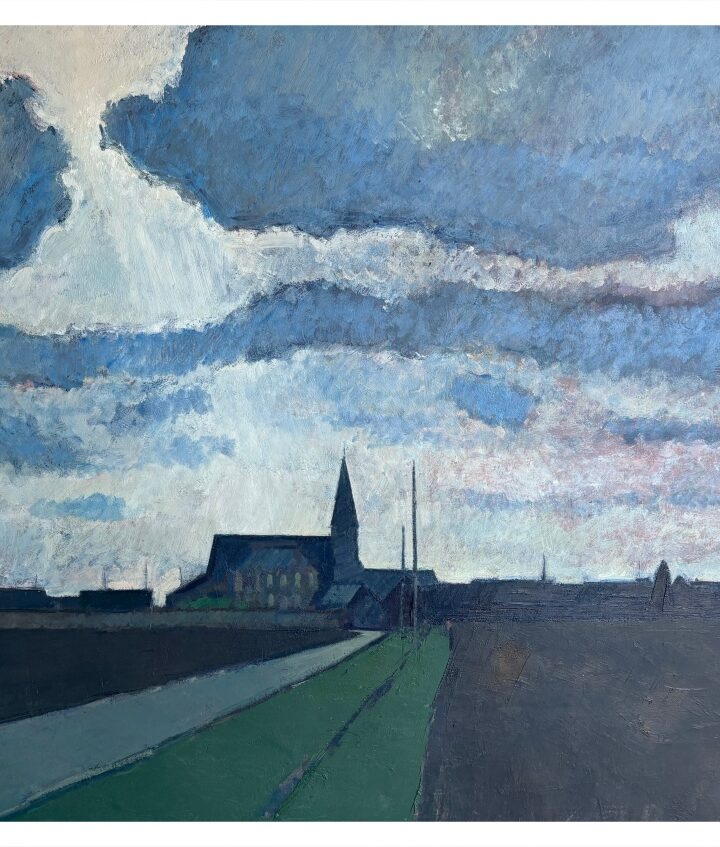
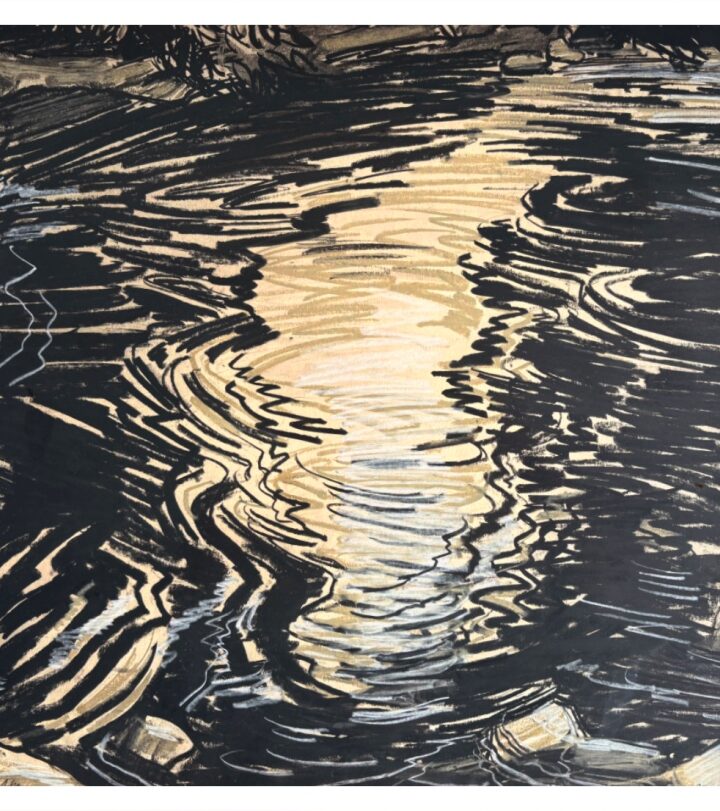
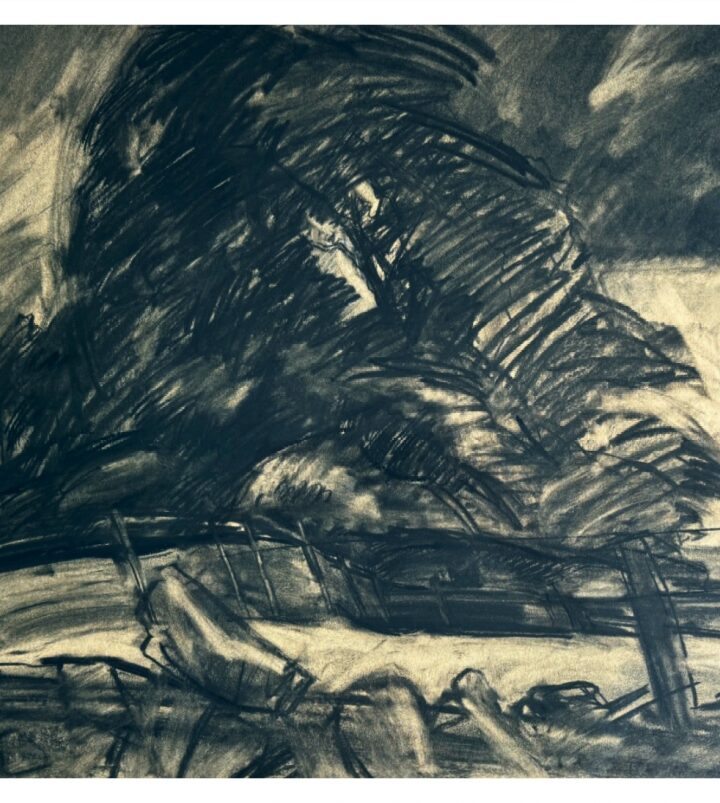
While he taught at St Martin’s (1954–73) and later at the City and Guilds of London Art School, Coker increasingly focused on landscape. His thickly applied paint, often using a palette knife or building up layers (sometimes wedging canvas between them for support), captured structure, texture, and movement in scenes from Essex, Epping Forest, the Scottish Highlands, and the French countryside (particularly Étretat, Provence, and the Jura). He also produced still lifes, seascapes, and etchings, publishing the influential book Etching Techniques in 1976.
Coker exhibited regularly at the Royal Academy from 1950 onward and held numerous solo shows, including at the Thackeray Gallery and with Chris Beetles Gallery. Major retrospectives included those at The Minories, Colchester (1972–73), and later exhibitions that revived interest in his work in the early 2000s. His paintings are held in public collections such as the Tate, British Museum, Fitzwilliam Museum, and many regional galleries.
He lived in Mistley and Manningtree, Essex, from the 1960s, drawing constant inspiration from the local landscape and the proximity of the sea. After personal challenges—including the death of his son Nicholas in 1985 and health issues (heart attacks and a stroke in 1990)—he resumed painting with renewed energy in his later years, producing vibrant, often more abstracted works.
Peter Coker died on 16 December 2004 at the age of 78. He is remembered as a dedicated, vigorous inheritor of realist traditions, whose astringent yet decorative vision left a lasting mark on post-war British art.