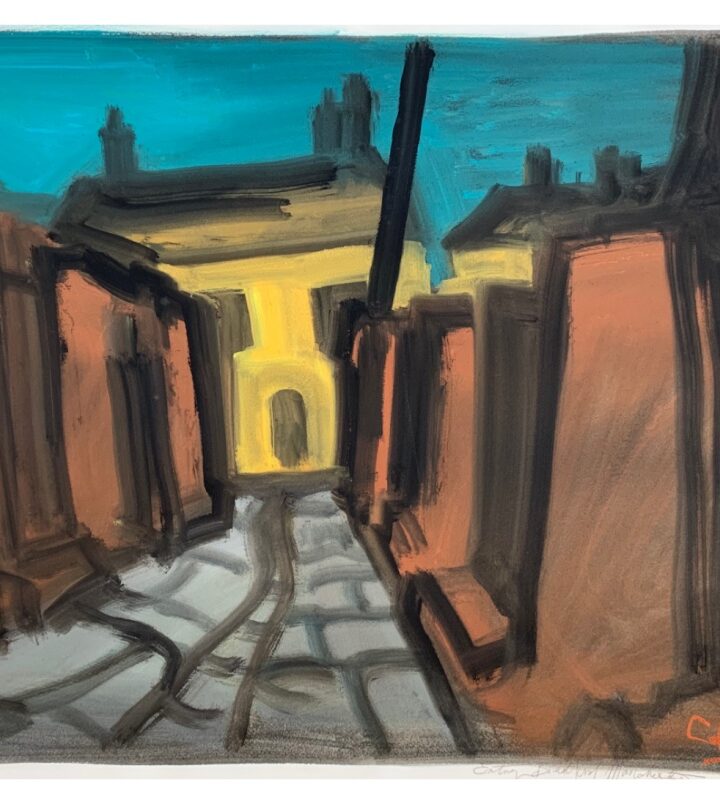
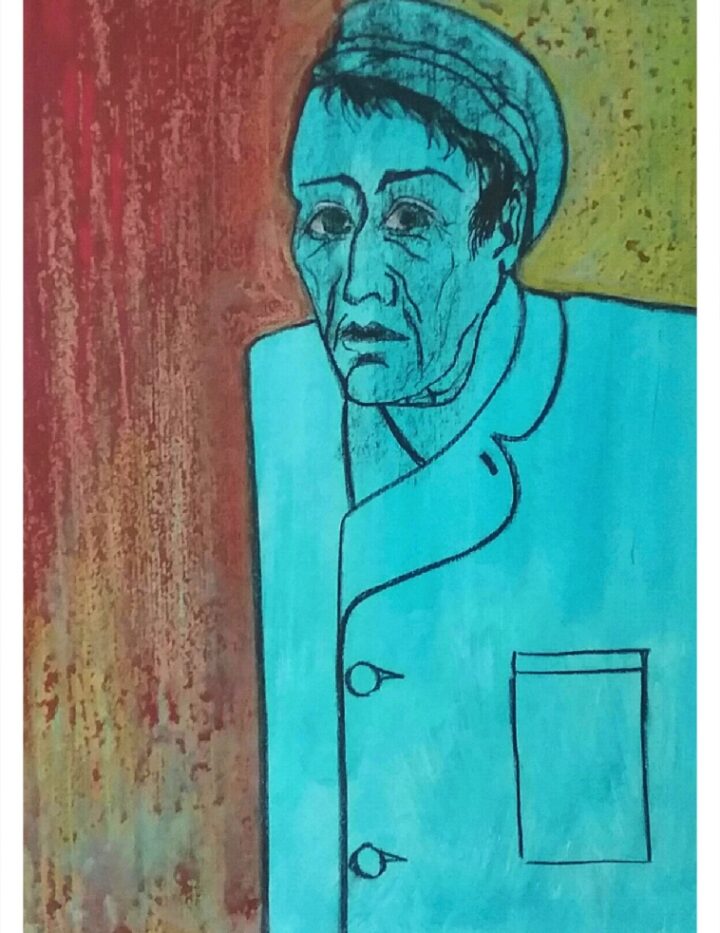
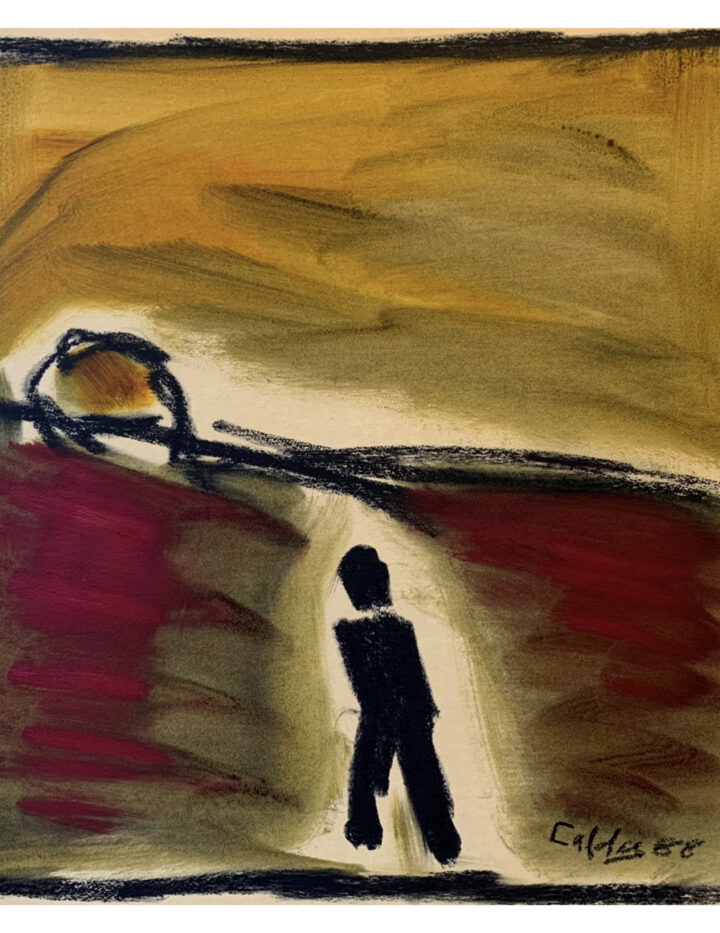
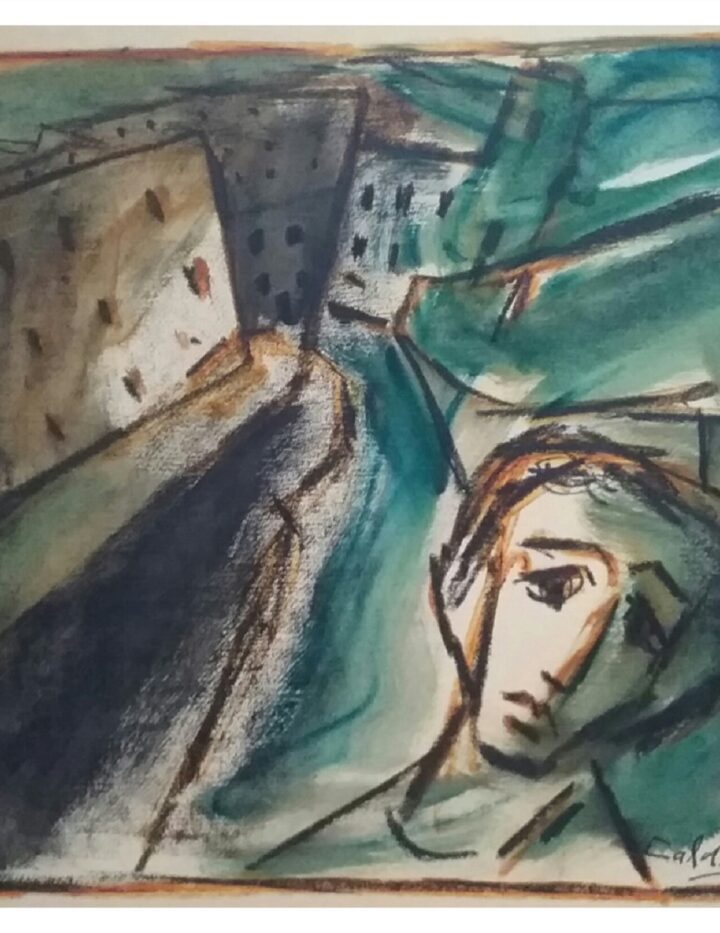
John Alvaro Caldas was born in Rusholme, Manchester in 1934. He showed an early talent for painting and drawing but chose to express his creativity through dance and jazz music before applying himself to making art in his North London house from the late 1960s until his death in 2006.
Self taught, John became an accomplished artist through focused endeavour and a dedication to studying the great artists of the past. Throughout the following decades, he produced a large body of work of an extraordinary intensity and technical excellence. He was aware of Ruskin’s ideas on “forgetting the self” when immersed in the act of painting and wrote of the pitfalls of self-consciousness and superficial style which can bedevil an artist’s practice. This concern reaped rewards as John’s unencumbered artistic voice proved to be a rare and singular one in late twentieth century British art.
John’s modest commercial success was due in part to his reluctance to engage wholeheartedly with the gallery ‘system’. For him, the making of art was its own reward and posterity would judge its merits. Although it is worth noting that on the few occasions his work saw the light of day in gallery exhibitions, it received excellent reviews.**
“J.A.C.’s reputation and appeal to discerning collectors continue to grow steadily and at some point he will, I’m sure, join the Pantheon of outstanding post-war British and European painters” David Powell, Philips Art Gallery.
** “His ‘Women in Library’ is the finest new painting I have seen in years and ought to be in the Tate”. Philip Ward Green, Arts Review, 30th September 1983. John’s solo exhibition was held at the Graeme Dowling Contemporary Art Gallery.